How Can a Plywood Supplier Ensure Consistent Quality?
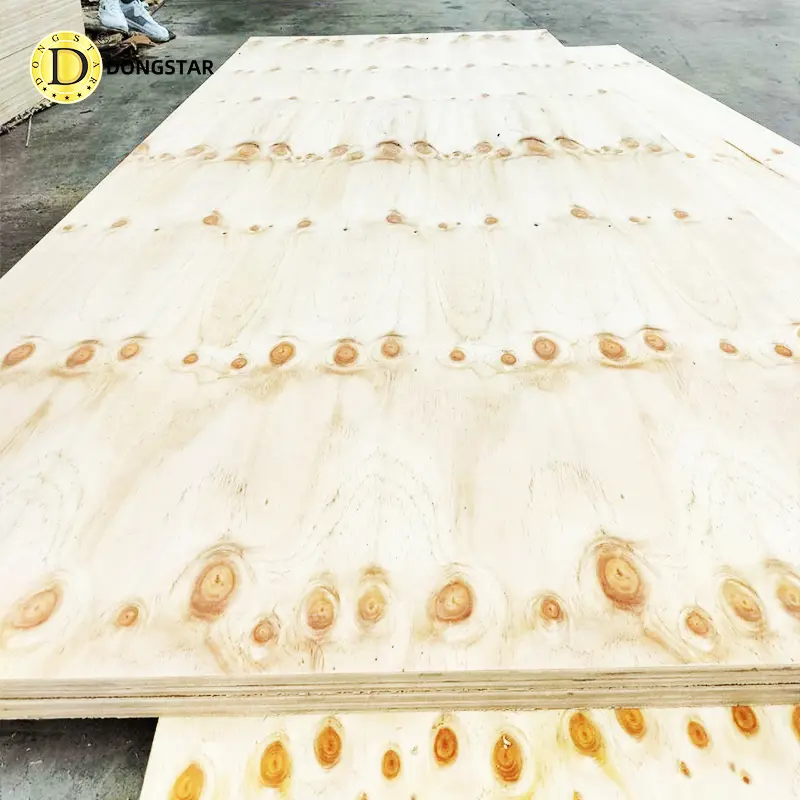
A plywood supplier can keep quality consistent only when specifications are measurable from veneer intake to container loading. For an 18 mm panel, control should cover veneer thickness, moisture, glue spread, press temperature, sanding, bonding, dimensions, emissions, and batch records. A practical QC plan may inspect 20–32 panels from a production lot, measure thickness at 4–5 points per sheet, and record veneer moisture before lay-up. European buyers may also require EN 314 bonding performance, EN 636 application classification, CE-related documentation, FSC® sourcing records, and formaldehyde data. Consistency comes from controlling each batch against the same numerical limits, not from checking appearance alone.
Wood variation enters production before the first veneer is peeled. Species, log diameter, density, knots, splits, grain direction, veneer thickness, and moisture all affect the final sheet. A supplier producing 10,000 panels from several timber lots should therefore identify raw material by lot instead of mixing all veneers into one production stream.
Moisture deserves early attention because veneers that look identical can behave differently under glue and heat. Many factories establish an internal veneer-moisture window around 6–12%, adjusted for species, resin, climate, and press settings. A 2–3 percentage-point difference between veneer groups can change glue absorption and steam release during pressing.
That moisture record should follow the veneer into grading. Face veneers are checked for color, open splits, patches, sanding potential, and visible defects, while inner plies are checked for holes, overlaps, missing wood, and joint quality. Inspecting 100 veneer sheets from each incoming lot gives more useful information than judging one finished panel at the end.
Once veneer quality is stable, thickness construction becomes easier to control. An 18 mm board made from 11 or 13 plies can react differently from another 18 mm board using fewer, thicker veneers, even when both meet the nominal dimension. The supplier should therefore record ply count, veneer species, target thickness, permitted substitutions, and face/back construction for every SKU.
Glue preparation should receive the same level of control. Resin type alone does not prove bonding performance because mix ratio, viscosity, filler content, hardener level, pot life, glue spread, open assembly time, and shop temperature can all affect the bond. A factory can weigh each glue batch to 0.1 kg resolution and record preparation time instead of relying on visual estimates.
Glue spread should then be verified by weight. If a production line targets 160–200 g/m² on a given construction, operators can weigh representative veneers before and after coating and record several checks per shift. The target is product-specific; changing veneer porosity, resin formulation, or panel use may require a different setting.
Lay-up connects glue control with press performance. Grain direction should alternate according to the approved construction, damaged core veneers should not be placed randomly, and open core gaps should stay within the buyer’s agreed limit. Checking the first 5–10 assemblies after a product change can catch a wrong ply count before hundreds of sheets enter the press.
Pressing then combines temperature, pressure, time, moisture, and adhesive chemistry in one operation. Instead of using one setting for every product, a supplier should retain a validated press recipe for each main panel family and record actual cycle information by batch. A deviation of 10°C or several minutes may matter when resin cure and panel thickness are closely specified.
The finished panel should not move immediately from the press into final inspection. Conditioning allows heat and moisture to redistribute before sanding and sizing. When several hundred hot panels are stacked, the cooling method, stack height, airflow, and waiting period should remain repeatable so one shift is not inspected under different conditions from another.
Sanding introduces another measurable source of variation. If an 18 mm board is allowed a buyer-agreed tolerance of ±0.5 mm, measurements should be taken at several positions instead of one corner. A sample of 20 sheets with 5 readings per sheet creates 100 thickness readings, making taper, edge over-sanding, and calibration problems easier to see.
A practical lot-control record can look like this:
| Check | Example control method | Example frequency |
|---|---|---|
| Veneer moisture | Meter readings across different bundles | 20–30 readings per lot |
| Glue spread | Weight before/after coating | 3–5 checks per shift |
| Panel thickness | 5 positions per sheet | 20 sheets per lot |
| Length and width | Calibrated tape or gauge | 10–20 sheets per lot |
| Squareness | Diagonal comparison | 10 sheets per lot |
| Bond quality | Test specimens from defined batches | According to product/test plan |
| Surface grade | Visual inspection under fixed criteria | Sample or 100% inspection |
Measurements also need a reference standard. EN 636:2012+A1:2015 covers plywood for general-purpose and structural applications under dry, humid, and exterior conditions, while its classification system distinguishes EN 636-1, EN 636-2, and EN 636-3 uses.
Bonding should be treated separately from surface appearance. EN 314 is commonly used for plywood bonding classification, with classes associated with dry, humid, and exterior service conditions. A smooth 1,220 × 2,440 mm panel can still contain weak glue lines, so testing selected specimens gives information that visual grading cannot provide.
A buyer should therefore ask for the test method, conditioning procedure, test frequency, batch reference, and acceptance requirement rather than accepting “waterproof” as a complete technical specification.
Dimensional checks need the same precision. The purchase specification should state nominal thickness, tolerance, panel size, squareness, bow, surface grade, edge quality, allowed repairs, core-gap policy, veneer construction, and packaging. When 1,000 sheets are ordered, a signed specification gives production and QC teams one reference instead of relying on an approved sample alone.
Appearance samples remain useful for decorative and furniture plywood because grain, patching, color range, sanding marks, and face repairs are difficult to describe with a single number. The buyer can approve 3–5 reference sheets or high-resolution defect limits while measurable properties stay in the written technical specification.
Internal defects require more attention for furniture plants using CNC routers. A board may pass a face inspection but expose core gaps when cut into narrow components. A supplier serving this market can cut test strips from representative panels, examine edges at several positions, and record void frequency from a sample of 10–20 sheets per lot.
Formaldehyde documentation should also identify the applicable method rather than use phrases such as “eco plywood” or “low emission.” Resin formulation, veneer species, panel thickness, conditioning, test method, and laboratory procedure can affect reported results, so certificates should show the tested product, test date, method, and result.
Traceability connects every previous control. A batch code can link production date, shift, veneer lot, glue batch, press line, inspection record, and packing list. If 12 sheets in a 2,000-sheet shipment later show a bonding issue, the factory can compare their production information with unaffected batches instead of treating the full shipment as identical.
A capable Plywood Supplier should retain those records long enough to compare repeat orders. Monthly data can show whether thickness, moisture, defects, or bonding results are moving toward a specification limit even when every current shipment still passes.
Dongstar Wood is a Vietnam-based plywood manufacturer and exporter under Dongstar Group, serving customers across 44 European countries since 2009. Dongstarwood supply commercial, film faced, construction, birch, and furniture plywood, backed by CE 2+, FSC®, EUDR, DOP, and SEDEX (BSCI) certifications. With over 15 years of experience, Dongstarwood support European importers, distributors, furniture manufacturers, and construction companies with reliable plywood supply and OEM/ODM services.
Certification documents still need to match the product being purchased. Buyers should check the certificate holder, scope, product type, issuing body, validity period, mill location where applicable, and supporting Declaration of Performance or test documentation. A certificate issued in 2024 for one panel construction should not automatically be treated as test data for every later SKU.
Incoming, in-process, and final inspection should therefore use separate records. Incoming QC covers veneers, resin, overlays, and other materials; process QC covers moisture, glue application, lay-up, pressing, and sanding; final QC covers dimensions, grade, edge condition, labeling, quantity, and packing. Splitting 30 inspection points across production is more informative than placing all 30 checks after manufacturing is complete.
Non-conforming material also needs a written route. Panels outside tolerance should be identified, separated, rechecked, and either reworked, downgraded under an approved rule, or rejected. When the same defect appears in 3 consecutive lots, production data should be reviewed for shared veneer, glue, press, sanding, or operator conditions before the next lot is released.
Packing is the last manufacturing control rather than a warehouse detail. Export bundles should remain flat, adequately strapped, protected at corners and faces, and identified by batch. A 40-foot container may carry many tonnes of plywood, so damaged battens, uneven stacking, water ingress, or wet container floors can affect material that passed factory inspection only hours earlier.
Container checks should record cleanliness, dryness, odor, floor condition, visible holes, door seals, and loading photos. Where condensation risk exists during a multi-week sea route, packaging and moisture-management measures should be selected for the route and season rather than copied from a previous shipment made under different conditions.
Repeat-order performance finally shows whether the system is working. A supplier can compare 12 months of data for thickness rejection percentage, surface defects, bonding failures, claims per 1,000 sheets, rework rate, and on-time shipment rate. A stable process should produce similar measured results across many lots, not one unusually good inspection report.
For buyers placing regular orders, comparing three or more consecutive batches provides a better view than evaluating a single pre-shipment sample. Panel measurements, test records, batch codes, corrective records, certificates, and packing evidence together show whether the same plywood specification can be reproduced when order volume moves from hundreds of sheets to several containers.